
Featured contributors: Jason Judd, Executive Director, Educate Maine ; Melissa Mitchell, Principal, Shead High School, James Roberts, Director, Coastal Washington County Institute of Technology; Deven Thapaliya, Maine Service Fellow

In rural Washington County, the future of the workforce is being shaped in classrooms, maker spaces, and community partnerships. Across the region, educators and community leaders are working together to ensure that STEM education is not only rigorous but relevant, accessible, and connected to real career pathways.
A recent discussion brought together educators, workforce development leaders, and community partners to explore how Washington County is expanding meaningful STEM opportunities for young people. The conversation emphasized collaboration, early STEM awareness, and hands-on learning, with a focus on building viable careers close to home.
Innovation in Local Schools
Shead High School has transformed learning through the Kilby Learning Commons, a multimedia maker space equipped with 3D printers, laser engravers, LEGOrobotics kits, sewing machines, and an audio recording studio. Principal Melissa Mitchell has secured significant grants to strengthen connectivity and technology access, including a Maine Community Foundation grant for the Learning Commons, a $180,000 FCC Emergency Connectivity Grant, and more than $75,000 in technology through the Maine Department of Education’s Teach with Tech program.
The school is launching a computer-building program in partnership with Give IT Get IT, where high school students learn to build desktop computers they can keep. The program includes training in cybersecurity, Linux, and coding, leading to microcredentials. Future expansions may include help-desk skills and industry-recognized certifications.
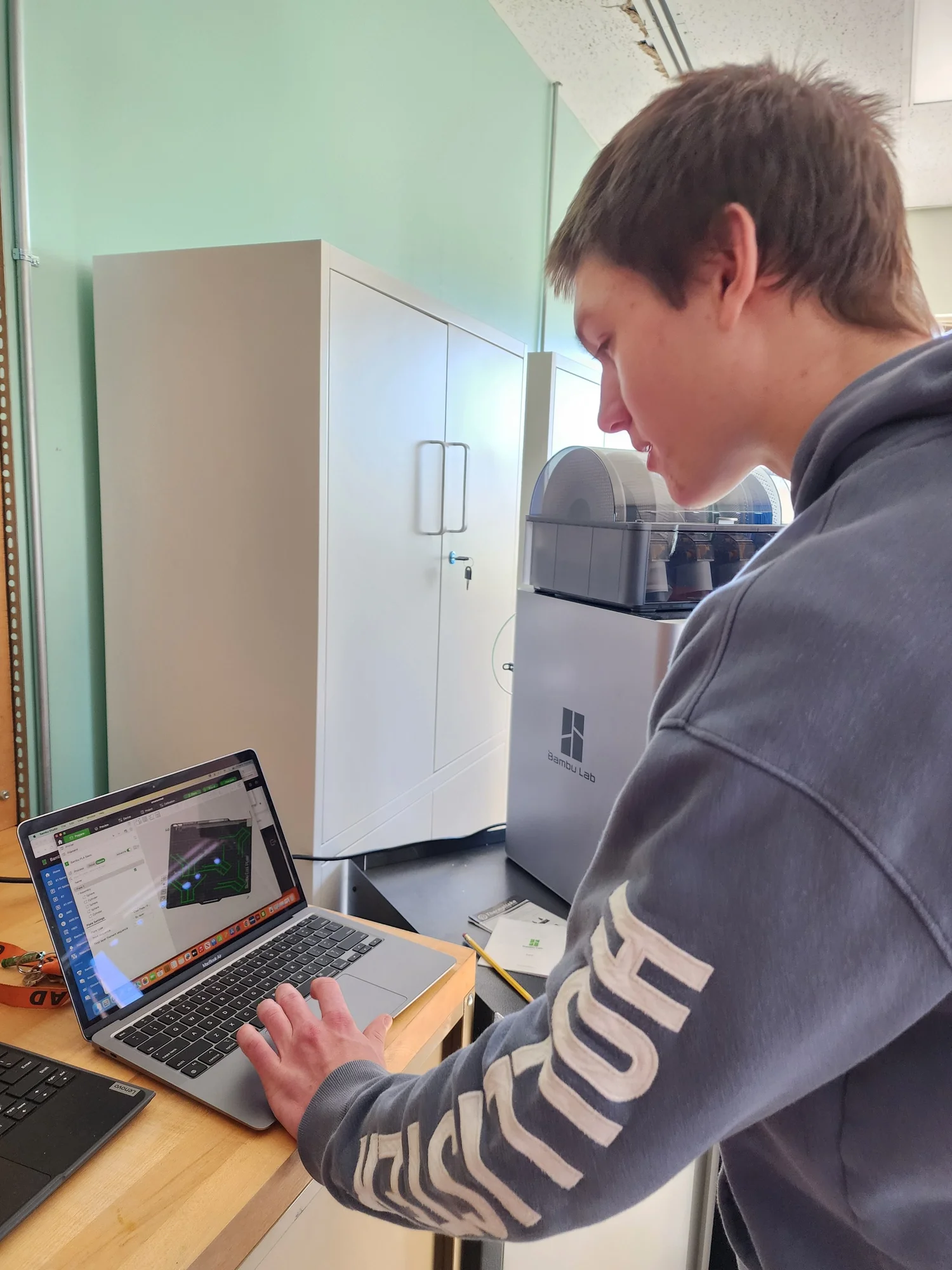
Student in the Kilby Learning Commons at Shead High School. Photo courtesy of Shead High.
The Coastal Washington County Institute of Technology offers 11 hands-on CTE programs, including aquaculture, culinary arts, building trades, early childhood education, health occupations, and a new computer science track. Director Jim Roberts is focused on updating curriculum to reflect emerging industry needs, such as EV maintenance and emissions standards, while also exploring program expansion into fields like cosmetology. CWCIT works closely with industry partners and current labor projections, to stay apprised of current and emerging career and industry standards and needs. This helps to ensure that graduates are prepared for the challenges of post-secondary college, apprenticeships and entering the workforce.
CTE leaders see aquaculture as a promising pathway for young people already connected to the fishing industry to diversify and build sustainable careers. For students with family ties to the working waterfront, aquaculture offers a way to innovate within tradition, blending STEM and entrepreneurship while strengthening Downeast industries. The aquaculture sector is growing in Washington and Hancock Counties, creating new opportunities for students to remain and thrive locally.
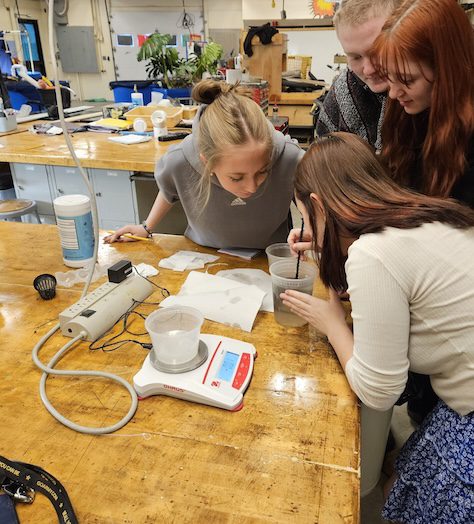
Students in the Aquaculture Program at CWCIT. Photo courtesy of CWCIT.
Regional and Statewide Programs
Educate Maine focuses on workforce development and experiential learning through programs such as Project Login, Girls Who Code, educator training, and the Maine Career Catalyst internship and apprenticeship network. Executive Director Jason Judd highlighted the recently launched Maine Mobile Biolab, which introduces middle school students to life science careers beyond traditional medical pathways and expands awareness of STEM at an early age.
The organization also runs the Aquaculture Pioneers program, a pre-apprenticeship program for high school students, college students, and adult learners that leads to aquaculture apprenticeship opportunities. This collaboration between the Gulf of Maine Research Institute, the Maine Aquaculture Association, and Educate Maine, helps anchor talent within Maine’s growing blue economy.
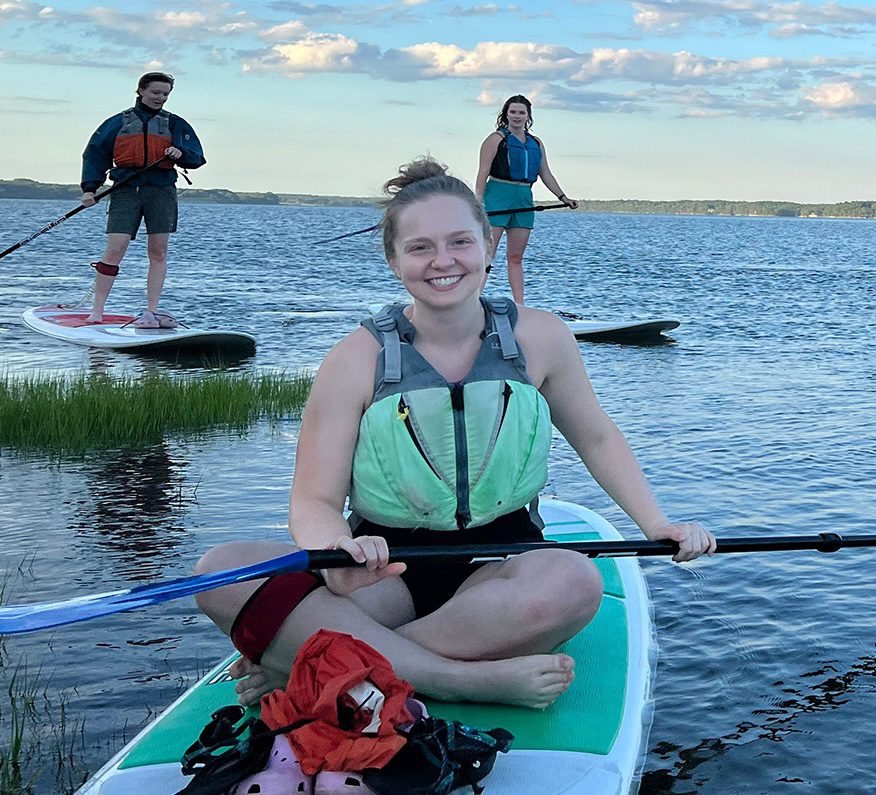
Aquaculture Pioneers program participants. Photo courtesy of Educate Maine/Maine Career Catalyst.
The Maine Service Fellows Initiative places young professionals with STEM backgrounds in rural communities to strengthen local capacity. Fellow Deven Thapaliya at Sunrise County Economic Council highlighted the connection between STEM skills and civic, environmental, and community development projects, including GIS mapping and infrastructure planning.
The fellowship offers a practical strategy to address brain drain, with STEM graduates serving their communities for 1,700 hours per year at minimal cost to municipalities, approximately $100 per month. The program reinforces the importance of clear career pathways that allow young people to build meaningful futures in Washington County.
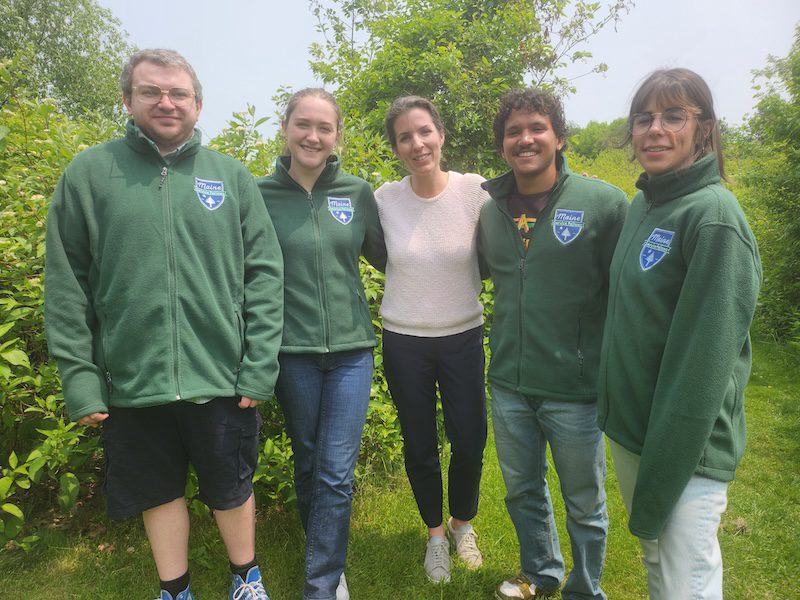
2025-26 Maine Service Fellows with Volunteer Maine Executive Director Brittany Gleixner-Hayat. Deven Thapaliya, SCEC Service Fellow second from right. Photo courtesy of Volunteer Maine
Challenges and Priorities
While progress is evident, participants were clear that strengthening STEM pathways requires addressing persistent barriers.
Participants identified several challenges facing STEM education in the region, including access to local technology expertise, transportation barriers for after-school programming, funding constraints, and students’ competing responsibilities such as family obligations and caregiving roles. There is also a need for stronger partnerships and clearer alignment across K-12 schools, higher education institutions, employers, and nonprofit organizations to ensure that pathways are coordinated and responsive to workforce demand.
Workforce challenges in emerging industries such as aquaculture include wage competitiveness, housing availability, and seasonal employment patterns, all of which influence whether young professionals can successfully build long-term careers in the region.
Looking ahead, priorities include integrating renewable energy, environmental science, climate-related fields, and artificial intelligence into curriculum and workforce development efforts across Washington County. Participants spoke to the importance of forward-thinking education that reflects both global trends and local opportunities.
A Shared Commitment to Local Futures
The message from participants was clear: retaining young professionals in Washington County requires more than strong schools. It requires meaningful career opportunities that integrate STEM skills with community development, entrepreneurship, and innovation, creating pathways where young people can build both their careers and their communities.
This work is grounded in the belief that Washington County’s future talent can grow, lead, and succeed right here at home, and is fueled by the understanding that the next generation is not a resource to export, but a strength to invest in. Through continued collaboration among educators, employers, and community partners, this momentum can expand, ensuring that young people have both the skills and the opportunity to build their futures in the communities they call home.